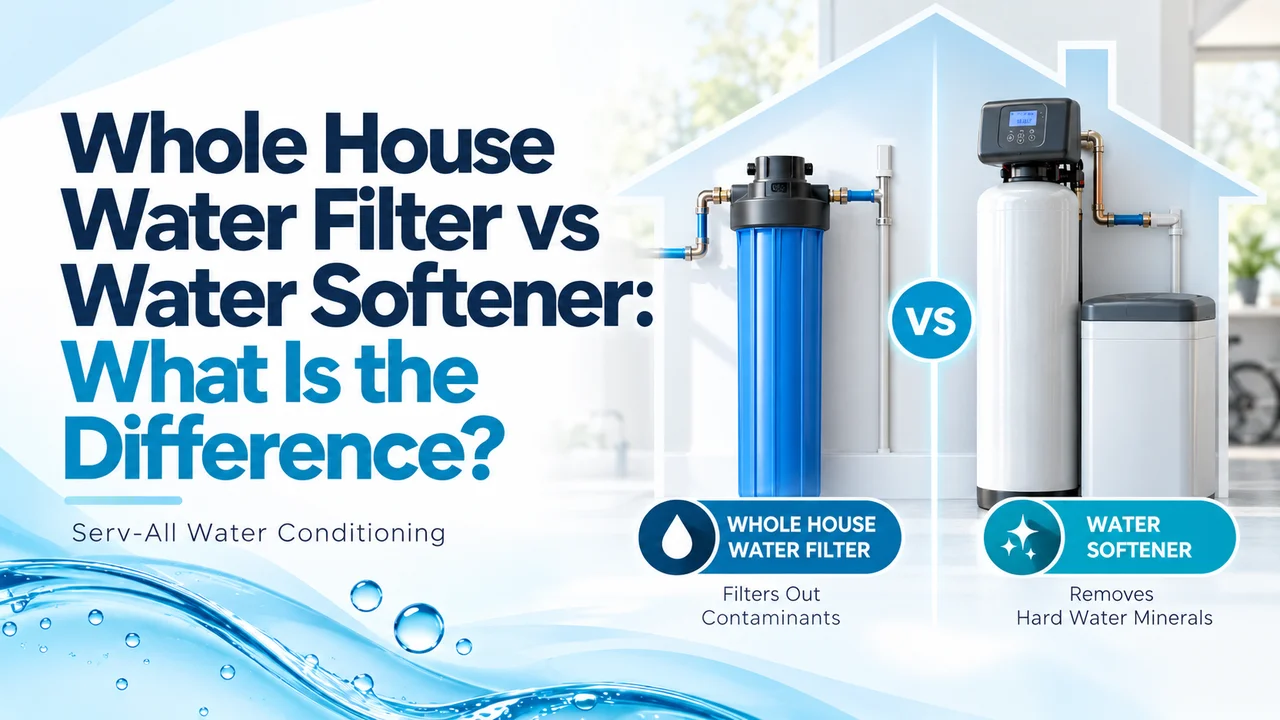
A whole house water filter and a water softener are not interchangeable. A filter is selected to reduce specific substances, particles, tastes, or odors. A softener is designed to reduce hardness minerals such as calcium and magnesium. Some homes need one, some need both, and others need a different point-of-use solution.
The correct choice starts with the problem you want to solve and reliable information about the water entering your home.
Quick Comparison
Choose a water softener when the main concern is mineral scale, spotted glassware, soap inefficiency, or hardness-related wear on fixtures and appliances. Choose a whole house filter when the goal is reducing a specific substance throughout the property, such as sediment or chlorine taste and odor, and the proposed filter is designed and certified for that purpose.
A filter does not necessarily soften water. A softener does not necessarily remove chlorine, sediment, or dissolved contaminants. Product labels and third-party certifications should state treatment claims clearly.
What a Water Softener Does
Traditional ion-exchange softeners use resin beads to capture calcium and magnesium. The system periodically regenerates with a brine solution, restoring the resin’s ability to exchange ions.
Reducing hardness can help control scale on faucets, shower glass, water heaters, dishwashers, and other water-using equipment. Soap and detergent usually work more effectively in softened water, so many families notice easier cleaning and less residue.
A softener requires a drain, electricity for most controls, and regular salt or potassium replenishment. It should be sized according to hardness, household use, and peak flow. An incorrectly sized unit may regenerate too frequently or struggle during high demand.
What a Whole House Water Filter Does
A whole house filter, also called a point-of-entry system, treats water before it is distributed to most fixtures. The media and design determine what it can reduce.
Common examples include:
- Sediment filters for sand, rust, silt, and visible particles
- Activated carbon for certain tastes, odors, and chlorine
- Specialized media for particular dissolved substances
- Ultraviolet systems for microorganisms under suitable conditions
- Multi-stage systems that combine compatible treatment methods
No single filter removes everything. A carbon filter marketed for taste and odor should not be assumed to reduce hardness, microorganisms, or every chemical. Review the contaminant-reduction claims and look for certification to the relevant NSF/ANSI standard.
Serv-All’s whole house water filtration options can be selected around the property’s source water, flow demand, and treatment goals.
The Main Difference: The Problem Being Treated
The easiest way to understand the difference is to connect each symptom with its likely cause. White crust on faucets, spots after water dries, and recurring scale usually point to hardness. A softener is the direct treatment for that concern.
Chlorine taste, unpleasant odor, discoloration, or visible particles may point toward filtration, but each symptom requires investigation. Odor can originate in plumbing or a water heater. Cloudiness can be trapped air rather than contamination. Testing and inspection help prevent buying the wrong equipment.
Do Las Vegas Homes Need Both?
Some Las Vegas households choose both because local water is very hard and they also want whole-home improvement in taste or odor. In a combined setup, treatment order matters. Equipment should be arranged so each stage protects the next one and the system maintains adequate pressure and flow.
A common plan may include a sediment prefilter when needed, activated carbon for an identified aesthetic concern, and a softener for hardness. Drinking-water reverse osmosis may then be installed at the kitchen sink for a separate point-of-use goal.
More equipment is not automatically better. Every stage adds purchase cost, pressure loss, maintenance, and replacement media. Install only stages tied to a defined need.
Water Testing Comes First
Municipal water-quality reports provide useful regional information, but a home’s plumbing and specific concerns still matter. Private-well properties require a different testing approach and may need regular testing for health-related contaminants.
Testing should answer questions such as:
- How hard is the water?
- Is sediment actually present?
- Is the concern aesthetic or health related?
- Does the proposed system have a verified claim for the issue?
- What flow rate must the system handle?
- Could the problem originate inside the home?
Professional water testing helps turn symptoms into a clear treatment plan. It also provides the hardness value needed to program a softener accurately.
Compare Maintenance Requirements
A softener needs salt, periodic cleaning, and checks for salt bridges or brine problems. It also uses water during regeneration. A metered control can regenerate according to actual use.
Whole house filters need cartridge or media replacement at intervals determined by the product, water condition, and usage. Waiting too long can reduce performance and restrict pressure. Some backwashing filters also require drainage and programmed cycles.
Ask for annual operating costs, replacement schedules, warranty terms, and local service availability before buying either system.
How to Choose the Right System
Follow a problem-first process:
- List the exact symptoms you want to change.
- Review the local water-quality report.
- Test the water when necessary.
- Match each problem to an appropriate technology.
- Verify independent certification and performance claims.
- Size the system for household flow and water use.
- Plan maintenance before installation.
- Compare total ownership cost, not just purchase price.
Avoid products that promise to remove every contaminant without specifying test conditions or certified claims. A credible recommendation explains the treatment mechanism, expected result, limitations, and maintenance.
Frequently Asked Questions
Final Takeaway
A water softener controls hardness. A whole house filter targets specific particles, tastes, odors, or contaminants according to its design. Choose the system that addresses the measured problem, and use both only when both functions are needed.
Serv-All Water Conditioning can evaluate Las Vegas-area water concerns, explain realistic treatment options, and design a system that fits the home’s water use without unnecessary stages.