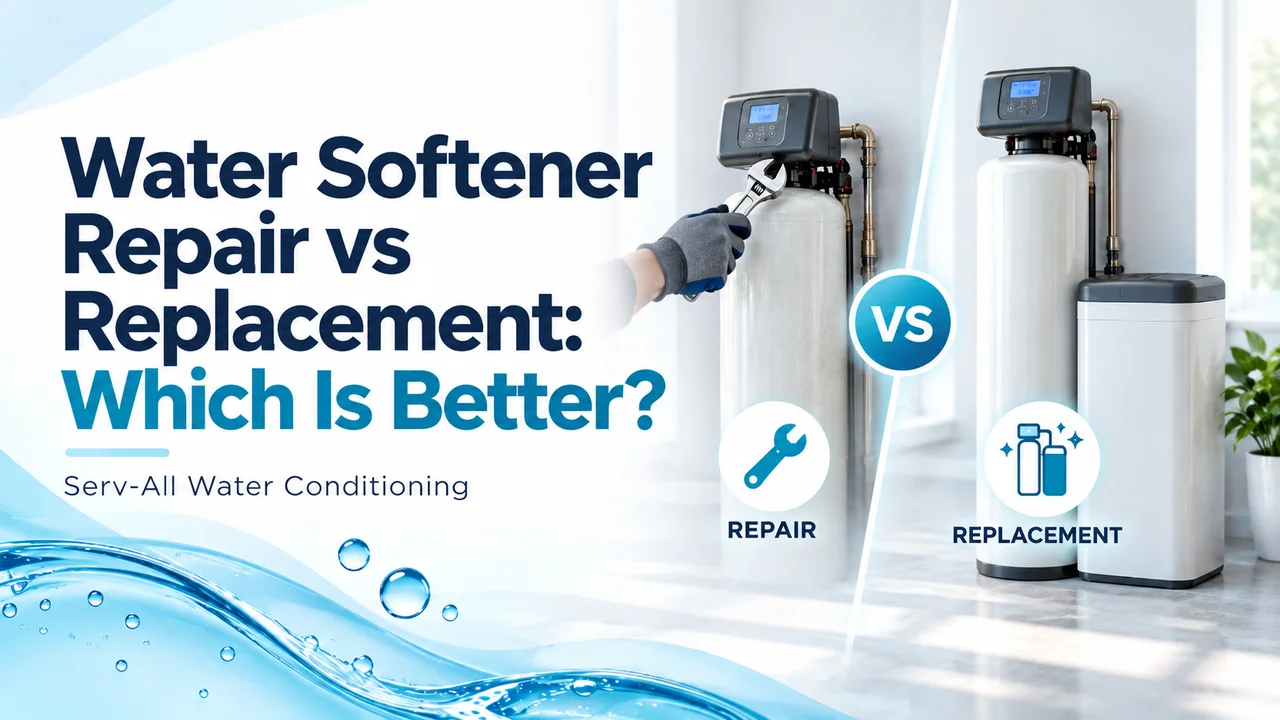
A water softener that stops producing soft water does not automatically need to be replaced. Many performance problems come from salt bridging, a clogged injector, incorrect programming, a worn seal, or another repairable issue. Replacement becomes more sensible when the unit is old, unreliable, inefficient, poorly sized, or facing a major component failure.
The best choice depends on the system’s age, repair history, diagnosis, operating cost, and expected life after the work is completed.
Quick Answer: Should You Repair or Replace It?
Repair is usually the better first option when the softener is relatively young, the tank and control valve are in good condition, and the problem involves a serviceable component. Replacement is often more economical when repairs are becoming frequent, the resin is exhausted, the tank is damaged, parts are unavailable, or the equipment no longer meets the home’s water demand.
Do not decide from symptoms alone. Low softness, unusual sounds, or excessive salt use can have several causes. A proper inspection identifies the failed part and shows whether the quoted repair will restore dependable performance.
Signs a Repair May Be Enough
A repair may be appropriate when the unit has been dependable and the current problem is isolated. Common repairable issues include:
- Salt bridging or salt mushing in the brine tank
- A blocked injector or venturi
- A clogged drain line
- Incorrect hardness or regeneration settings
- A worn seal, spacer, piston, motor, or small valve component
- A dirty brine well or float assembly
- A temporary power or timer problem
- Minor leaks from serviceable fittings
If the unit is otherwise sound, fixing one component can provide years of additional service. Professional water softener repair should include a diagnosis, an explanation of the failure, and verification that the unit is softening water after service.
Signs Replacement May Be Better
Replacement deserves serious consideration when several problems appear together. Warning signs include recurring breakdowns, inconsistent soft water after repeated service, cracked tanks, obsolete controls, severe resin degradation, or a system that was never sized correctly.
Age matters, but there is no universal expiration date. Water quality, chlorine exposure, regeneration frequency, installation quality, and maintenance all affect service life. An older unit that has been maintained may outperform a neglected newer one.
Replacement may also make sense when the existing softener wastes salt and water because it regenerates on a fixed schedule rather than according to actual use. A modern metered system can adjust regeneration to household demand, although projected savings should be evaluated realistically.
Compare the Full Cost, Not Just Today’s Invoice
A low repair price is attractive, but the cheapest immediate option is not always the best long-term choice. Compare:
- The repair estimate
- The cost of replacement and installation
- The expected remaining life after repair
- Recent service expenses
- Salt and regeneration-water use
- Warranty coverage
- Availability of replacement parts
- Risk of another major failure
A practical approach is to divide the repair cost by the realistic years of service it is expected to add. Then compare that with the annualized cost of a properly sized replacement. This does not produce a perfect answer, but it makes the decision more objective.
Consider the System’s Age and Repair History
A single service call on an otherwise reliable softener is normal. Several calls within a short period suggest that components are aging together. Keep records of dates, symptoms, replaced parts, and costs. That history helps a technician distinguish a one-time fault from a pattern.
If the system has already received a major valve rebuild, resin replacement, and repeated electrical repairs, another significant expense may provide limited value. Conversely, replacing a young system because of a small clogged part would usually be wasteful.
Performance Problems That Need Diagnosis
Hard water returning is the most obvious complaint, but it does not identify the cause. The unit may be bypassed, programmed incorrectly, out of salt, unable to draw brine, or experiencing a valve problem. High salt use may come from a leak, excessive regeneration, wrong settings, or increased household demand.
Low pressure may involve the softener, but it can also originate elsewhere in the plumbing. A technician should compare pressure and water quality before and after the equipment. This prevents an unnecessary replacement that fails to solve the real issue.
When New Installation Adds Value
A replacement can improve reliability when the old equipment is undersized or incompatible with current household use. A home with more occupants, larger fixtures, or additional water-using appliances may need different capacity and flow performance than it did years ago.
Modern controls can also make operation easier by tracking usage and displaying service information. If replacement is justified, professional water softener installation should include hardness testing, flow and capacity calculations, accessible bypass plumbing, proper drainage, and clear programming instructions.
Questions to Ask the Technician
Before approving repair or replacement, ask:
- What exactly failed?
- Is the tank structurally sound?
- Are parts readily available?
- How long should the repair reasonably last?
- Does the unit still match our hardness and water use?
- Is the resin still effective?
- What warranty applies to the repair?
- What is included in a replacement estimate?
- Will the new system reduce salt or water use?
A trustworthy recommendation should connect the diagnosis to the proposed solution. Be cautious of a replacement recommendation made without testing the water, checking settings, and inspecting the main components.
Frequently Asked Questions
Service life varies with equipment quality, water chemistry, usage, maintenance, and component availability. Age should be considered alongside actual condition and repair history.
It can be, especially when the failure is minor and the tank, valve, and resin remain in good condition. A major repair on an obsolete or frequently failing unit is less attractive.
Possible causes include incorrect settings, a leaking seal, excessive regeneration, a brine-control problem, or increased water use. Diagnosis is needed before replacing the equipment.
A properly sized metered unit may use salt and regeneration water more efficiently than an old timer-based or poorly programmed system. Actual savings depend on use and hardness.
Final Decision
Choose repair when the problem is specific, parts are available, and the system should remain reliable afterward. Choose replacement when failures are recurring, major components are compromised, performance no longer meets demand, or the combined cost of repairs is approaching the value of new equipment.
Serv-All Water Conditioning can inspect the system, confirm the water condition, and explain both options clearly. The goal is not simply to install something new. It is to restore dependable soft water with the most sensible long-term investment.