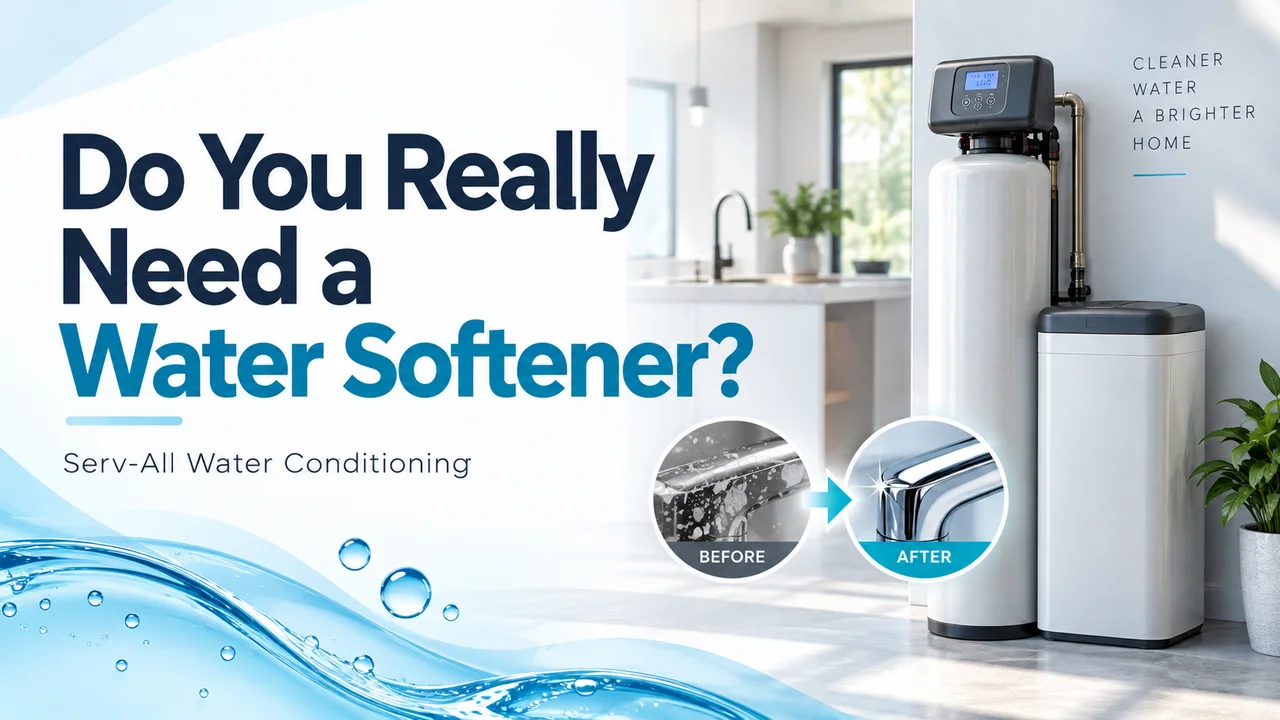
Hard water is common in the Las Vegas Valley, but that does not mean every household needs the same treatment system. A water softener is usually worth considering when mineral scale is damaging fixtures, shortening appliance life, making cleaning harder, or leaving skin and hair feeling dry. The right decision should be based on measured hardness, the condition of your plumbing, and what you want to improve.
Quick Answer: Is a Water Softener Necessary?
A water softener is not required to make municipally supplied water safe to drink. Its main job is to reduce hardness minerals, primarily calcium and magnesium. These minerals are not usually a health concern, but they can create scale on faucets, shower glass, water heaters, dishwashers, and pipes. If you see repeated mineral buildup or spend too much time fighting spots and soap residue, a softener may provide practical value.
What Hard Water Does Inside a Home
Hard water leaves dissolved minerals behind whenever water evaporates or is heated. That is why chalky residue often appears around faucets and showerheads. The same process can happen inside equipment where you cannot easily see it.
Scale can coat heating elements, restrict small openings, reduce water flow, and make appliances work harder. Soap also reacts differently in hard water. You may use more shampoo, detergent, or cleaning product to get the result you expect, yet still notice dull laundry or a film on surfaces.
Common signs include:
- White or crusty buildup on fixtures
- Spots on glassware and shower doors
- Soap that does not lather well
- Stiff or dull-feeling laundry
- Dry-feeling skin and hair after bathing
- Repeated scale around hot-water equipment
- Reduced flow from mineral-clogged aerators
One symptom alone does not prove you need a softener. Several recurring signs, supported by a hardness result, make a stronger case.
Start With a Water Test
Guessing from appearance can lead to the wrong purchase. A professional water test can identify hardness and help separate mineral problems from taste, odor, sediment, or other concerns. Serv-All offers water testing in Las Vegas so homeowners can select treatment based on actual water conditions rather than a generic sales package.
Hardness is commonly reported in grains per gallon or milligrams per liter. Southern Nevada Water Authority describes local water as very hard, although the exact experience can vary with location, plumbing, and household use. A test also creates a useful baseline for sizing and programming a system correctly.
What a Water Softener Can Improve
A traditional ion-exchange softener removes hardness ions and replaces them with sodium or potassium ions. When properly sized and maintained, it can reduce scale formation throughout the home.
Benefits may include easier cleaning, fewer spots, better soap performance, softer-feeling laundry, and less scale stress on water-using appliances. Some homeowners also notice that showerheads and faucet aerators stay clearer for longer.
A softener does not remove every substance from water. It is not designed primarily for chlorine taste, sediment, dissolved chemicals, or microorganisms. Those concerns may require filtration, reverse osmosis, disinfection, or a combination system.
When You May Not Need One
You may decide against a conventional softener if hardness is low, scale is minimal, or your main concern is drinking-water taste. A point-of-use drinking-water system may be a better match when the goal is water for cooking and drinking rather than whole-home scale control.
Some homeowners prefer a salt-free conditioner. These systems are generally intended to change how hardness minerals behave instead of removing them. Results, limitations, and maintenance requirements vary by technology. Ask for a clear explanation of what the proposed unit does and does not do.
Renters or households planning to move soon may also choose smaller, targeted improvements. The best option should fit the property, budget, and length of ownership.
Questions to Ask Before Buying
Before selecting equipment, ask:
- What is the measured hardness level?
- How many people live in the home?
- What is the household’s typical peak water use?
- Is there enough space for the equipment and drain connection?
- Does the system use metered regeneration?
- How much salt and water will regeneration use?
- What maintenance is required?
- Is the unit certified to an applicable performance standard?
- Who will service the equipment after installation?
System size matters. An undersized softener may regenerate too often or allow hard water through during high demand. An oversized or poorly programmed unit can waste resources. A professional should consider hardness, water use, flow rate, plumbing, and installation conditions.
Water Softener vs Water Filter
A softener addresses hardness. A filter addresses specified substances or aesthetic issues, depending on its media and certification. For example, activated carbon is often used for chlorine taste and odor, while sediment filtration captures particles. Reverse osmosis treats drinking water through a membrane and several stages.
Some homes benefit from both softening and filtration, but adding equipment without a defined goal increases cost and maintenance. Treatment should solve a documented problem.
Installation and Ongoing Maintenance
Professional installation helps protect water pressure, drainage, bypass operation, and access for future service. A correctly placed bypass valve is especially useful because it allows water to continue flowing while the softener is serviced.
After installation, keep the brine tank supplied with the recommended salt, watch for salt bridging, and follow the manufacturer’s cleaning schedule. Changes in water feel, excessive salt use, constant regeneration, or declining pressure may signal a setup or repair issue.
If testing confirms that softening is the right solution, Serv-All provides water softener installation for Las Vegas-area homes, with system selection based on household needs and local water conditions.
Frequently Asked Questions
A softener is not a general purifier. It reduces hardness minerals. Drinking-water safety depends on the source and any specific contaminants present. Choose additional treatment only after identifying the concern.
A standard ion-exchange softener is not designed to remove chlorine. Activated carbon or another appropriately certified filter is usually used for chlorine taste and odor.
Hardness minerals are generally considered an aesthetic and operational issue rather than a health threat. The common concerns are scale, soap performance, cleaning, and equipment efficiency.
Maintenance depends on water use, hardness, equipment design, and manufacturer instructions. Homeowners should maintain salt, inspect for bridging, and arrange service if performance or regeneration behavior changes.
Final Takeaway
You probably need a water softener when confirmed hardness is causing recurring scale, cleaning problems, or equipment stress. You may not need one when hardness is low or your actual concern is taste, odor, or a specific contaminant. Test first, define the outcome you want, and choose equipment sized for your home. That approach produces a more useful system and avoids paying for treatment that does not address the real issue.