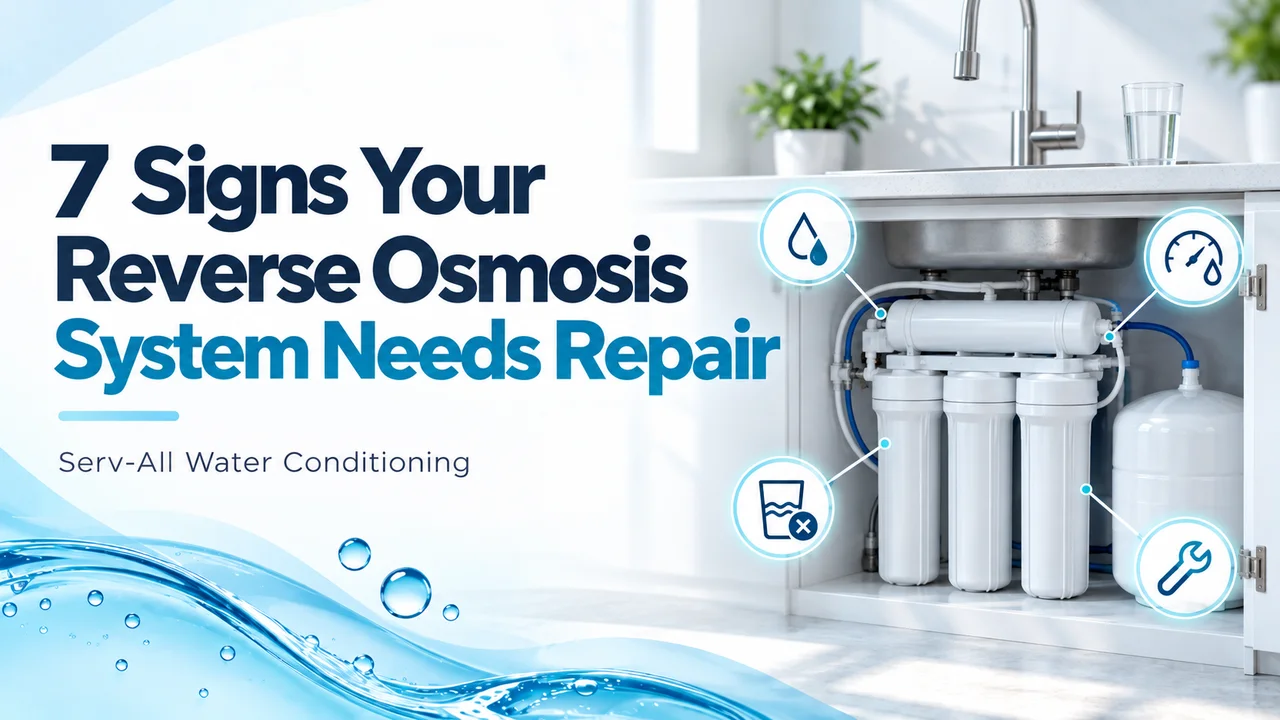
A reverse osmosis system needs attention when water flow drops sharply, taste or odor returns, the unit leaks, the drain runs constantly, or the system makes unfamiliar noises. Some problems are solved by scheduled filter service. Others require testing the tank, membrane, automatic shutoff valve, flow restrictor, tubing, or fittings.
Do not ignore a change in performance. Early diagnosis can prevent water damage, wasted water, and unnecessary stress on the membrane.
1. The Faucet Flow Is Much Slower
Reverse osmosis faucets normally dispense more slowly than a standard kitchen faucet, but a clear decline from the system’s usual performance is a warning sign. Possible causes include clogged prefilters, a depleted membrane, low feed pressure, a partially closed valve, a kinked tube, or inadequate tank pressure.
First confirm that the feed-water valve and storage-tank valve are fully open. Check for bent tubing and review the filter-change date. If the problem continues, a technician can measure feed pressure, tank pressure, and production rate.
A storage tank should be checked when empty because water pressure affects the reading. Randomly adding air without following the manufacturer’s specification can make the problem worse.
2. The Water Tastes or Smells Different
A return of chlorine taste, stale flavor, or an unusual odor may mean the carbon stages are exhausted, water has remained stagnant, the membrane is underperforming, or the system needs sanitizing.
Change is more important than personal preference. If the water tasted clean for months and suddenly changes, investigate. Replace filters according to the manufacturer’s schedule and use compatible cartridges.
Taste alone cannot confirm whether the membrane is working. A total dissolved solids comparison may help evaluate rejection performance when used correctly, but it does not identify every contaminant.
3. Water Is Leaking Under the Sink
Even a slow drip can damage cabinets and flooring. Common leak points include push-connect fittings, threaded connections, filter housings, faucet tubing, the tank valve, and drain-saddle connections.
Turn off the feed water if active leaking is present, dry the area, and identify the source. Do not overtighten plastic housings or fittings because they can crack. A damaged housing, distorted O-ring, or incorrectly seated tube may need replacement.
Serv-All provides reverse osmosis repair for Las Vegas homes when leaks, pressure problems, or component failures require professional diagnosis.
4. The System Drains Constantly
An RO system sends reject water to the drain while producing purified water. The drain should not run continuously after the storage tank is full and the system has had time to shut down.
Constant draining may result from low feed pressure, incorrect tank pressure, a failed automatic shutoff valve, a damaged check valve, a worn membrane, or an incorrect flow restrictor. It wastes water and signals that the production and shutoff cycle is not working correctly.
Listen after no water has been used for several hours. A continued drain sound deserves inspection.
5. The Unit Makes New or Persistent Noises
Some sounds are normal after filter replacement, system startup, or tank refill. Air moving through lines can create temporary sputtering or gurgling.
Persistent vibration, hammering, rapid clicking, or loud drain noise may indicate unstable pressure, trapped air, loose tubing, a drain connection problem, or a failing component. Note when the sound occurs and whether it stops after the tank fills. That information helps narrow the diagnosis.
6. The Storage Tank Does Not Fill Properly
A tank that feels empty after many hours may point to restricted filters, weak feed pressure, a shut valve, a membrane problem, or incorrect tank pressure. A tank that feels full but delivers very little water may contain mostly air or have a damaged internal bladder.
Production rate changes with water temperature, feed pressure, incoming dissolved solids, membrane condition, and system design. Compare performance with the manufacturer’s rating under realistic conditions rather than expecting the advertised maximum in every home.
7. Filters Need Replacement Too Often
Prefilters protect the membrane from sediment and chlorine. If they clog unusually quickly, incoming water conditions may have changed, the cartridges may be undersized, or household demand may be greater than expected.
Frequent clogging can reduce pressure and shorten membrane life. A professional should review water conditions, cartridge type, housing size, and service interval instead of simply replacing the same filter repeatedly.
A scheduled RO filter change helps maintain taste, flow, and membrane protection. Follow the manufacturer’s sequence and sanitize the system when directed.
Repair or Routine Maintenance?
Routine maintenance usually includes prefilter, postfilter, and membrane replacement at the appropriate intervals, plus sanitizing and leak checks. Repair addresses a component or performance failure.
A filter change may solve slow flow or taste problems when cartridges are overdue. Repair may be needed when new filters do not restore performance, a housing leaks, the tank bladder fails, or the system never shuts off.
Safe Checks Homeowners Can Perform
You can confirm valve positions, look for kinked tubing, note filter dates, observe the drain cycle, and inspect for visible leaks. Keep towels and a flashlight nearby when checking under the sink.
Avoid opening pressurized housings, altering drain components, or adding tank pressure without the correct procedure. Shut off the feed water when a leak is active.
What a Technician Should Test
A thorough service visit may include:
- Incoming water pressure
- Tank air pressure when empty
- Production and recovery behavior
- Total dissolved solids before and after treatment
- Filter and membrane condition
- Automatic shutoff and check-valve operation
- Flow restrictor compatibility
- Tubing, faucet, housings, and fittings
- Drain connection and air gap
- Sanitation condition
The goal is to identify the failed stage rather than replacing parts at random.
Frequently Asked Questions
Final Takeaway
A sudden change in flow, taste, noise, leakage, tank performance, filter life, or drain behavior means your RO system needs attention. Begin with safe visual checks and maintenance history, then arrange professional service when the cause is uncertain or a component has failed.
Timely repair protects the cabinet, reduces waste, and helps the membrane and storage system operate as designed.